
Double or triple glazing: what really pays off?
Date: 23/10/2026
Author: Filip
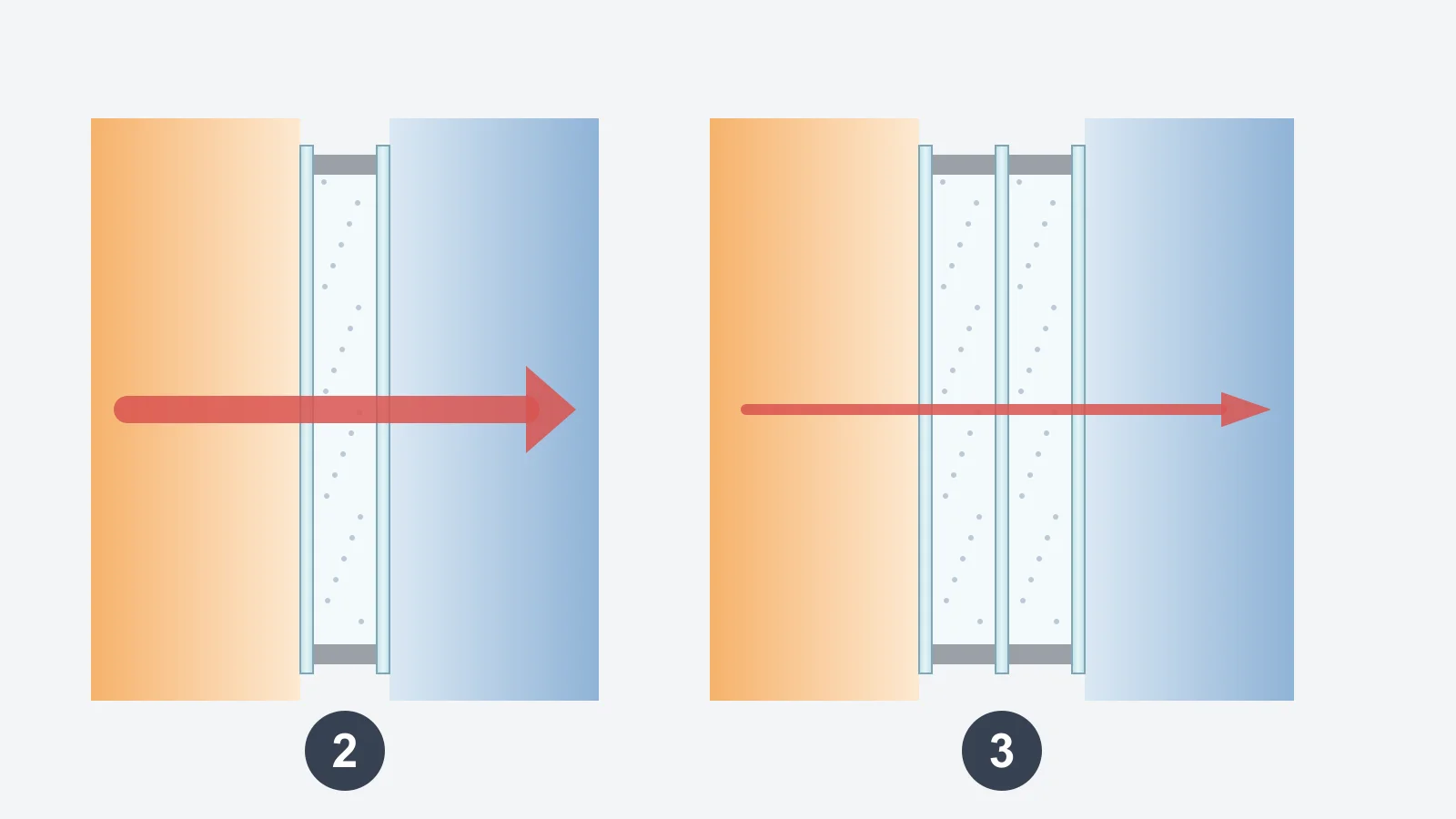
When choosing new windows, the same question almost always comes up: double or triple glazing? Triple glazing insulates better, but it's heavier and costs more, and it doesn't pay off equally in every house. Here's what the real difference is and how to choose for your home.
What the difference actually is
A double-glazed unit has two panes and one cavity between them; a triple-glazed unit has three panes and two cavities. The cavities are filled with argon, and at least one pane has a low-emissivity (low-e) coating that reflects heat back into the room. How much heat the glass lets through is shown by its Ug value, in W/m²K: the lower the number, the better.
- Good double glazing (low-e and argon): about 1.0 to 1.1 W/m²K.
- Triple glazing: about 0.5 to 0.7 W/m²K, so roughly half the heat loss through the glass.
For the whole window the figure is Uw, which also covers the frame profile, the spacer between the panes and the installation. That's why triple glazing in a weak profile, or badly installed, doesn't deliver what it promises. Ask for the Uw of the whole window, not just the glass.
Advantages of triple glazing
- Less heat loss, which matters most on large glass areas and north-facing windows.
- The inner pane stays warmer in winter, so there's less condensation at the edges and no cold feeling when you sit by the window.
- It suits heat pumps and underfloor heating, where every bit of heat loss shows on the bill.
What to know before you decide
- A triple-glazed unit is about half as heavy again (three panes instead of two), so it needs good hardware and a well-adjusted sash.
- It lets in a little less light and less heat from the sun, which you notice on large south-facing windows.
- It costs more, and the savings pay back more slowly if the house has no facade insulation: then most of the heat escapes through the walls anyway.
- For sound insulation the number of panes isn't decisive. Panes of different thickness and laminated glass help more.
Our recommendation
- New house, house with an insulated facade or heating by heat pump: triple glazing.
- Older house without facade insulation and a limited budget: good double glazing with low-e, argon and a warm-edge spacer, and the rest of the money into insulation.
- Bedroom on a busy street: consider asymmetric or laminated glass, whatever the number of panes.
It's easiest to decide on site: we come, look at which way the windows face, their size and the state of the house, and suggest the glazing that pays off for you.
Free measuring and advice: +381 64 1284447or [email protected]
Conclusion: Triple glazing pays off most in new and insulated houses, on large windows and with heat pump heating. In an older house without facade insulation, good double glazing plus investing in insulation often gives more for the same money. For sound, the thickness and type of glass matter, not the number of panes.
Latest Posts
Getting PVC windows ready for winter: 6 steps you can do yourself
23/10/2026
Filip
Winter mode for the hardware, seal care, drainage slots and airing without condensation. A few minutes per window before the first frost.
Read more
PVC or security entrance door: which to choose for a house, and which for a flat
23/10/2026
Filip
An entrance from outside and one from a building's hallway need different doors. The advantages of PVC entrance doors and of security doors, and what to look for.
Read more